


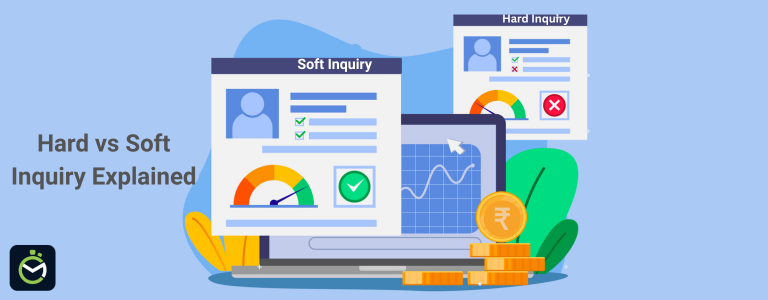
Loan application processing comes with a series of steps. Enquiring about your Credit is one such step that needs to be adhered to. A credit inquiry can happen either way when you want to find out your own credit standing with the credit bureau. This amounts to “Soft Inquiry”. Lenders go in for an inquiry on your credit history with the credit bureaus before granting you a loan. This process of inquiring into your credit history is known as “Hard Inquiry”.
What Is a Credit Inquiry?
A credit inquiry is a request submitted by a financial institution or firm for an individual's or an entity's credit information. This credit information is pulled out of your credit report held by credit bureaus. The credit report will provide lenders with a detailed history of existing debt obligations and payment history. It will not be an overstatement to say that your credit inquiry is the first step towards credit approval.
Difference Between Hard Inquiry and Soft Inquiry
The following table provides a detailed comparison between hard and soft inquiries. They are:
| Comparison Criteria | Hard Inquiry | Soft Inquiry |
| Credit Score | Gets affected. Temporarily lowering your score by a few points | It does not affect your credit score |
| Consent of Credit Inquiry | Required | Not Required |
| Timing of Credit Inquiry | Done at the time of granting loans or credit cards | Done by self or during a pre-approved loan offer |
| Appearance on Your Credit Report | Yes. Appears on the Credit Report | No. Not Necessarily |
| Purpose | Done when applying for credit | Done for background checks |
| Consent Required | Yes. Your permission is needed | No explicit permission required |
| Visible to Lenders | Visible to Banks or NBFCs. Affects the evaluation | Visible. But ignored in loan evaluation |
| Impact | Too many hard Inquiries will pull down credit score | Unlimited soft Inquiries, no negative effect |
| Reason to Undergo | To assess your credit worthiness to grant loans or credit cards | To provide pre-approved offers, or to check your own score |
| Initiated By | Lenders | You, Lenders, Employers, and Credit Bureaus |
What is a Hard Inquiry?
A hard inquiry is requested by a lender when you have applied for a loan or credit card. Hard Inquiries are credit reports that list your credit score and credit history in detail. This hard Inquiry helps lenders evaluate your credit responsibility. Lenders initiate hard inquiries after obtaining your consent.
It is good practice not to initiate hard Inquiries, as they remain on your credit report for almost 2 years. Moreover, these hard inquiries might temporarily pull down your credit score. So go for a loan or credit card only when you need it the most.
A credit report with several hard inquiries within a short period ultimately results in a low credit score. Too many hard Inquiries can also make you appear credit-hungry. This will project a negative image to lenders, who might avoid extending credit to you. If they do give, they might offer it at a higher interest rate with unfavorable terms and conditions.
What is a Soft Inquiry?
A soft inquiry can be done for various requirements. These soft inquiries are not recorded on your credit report. Many banks or NBFCs conduct a soft inquiry on prospective customers to offer pre-approved loans or credit cards. In the same manner, borrowers can also conduct a soft inquiry on their credit reports to check for any discrepancies or determine whether their credit score is sufficient to obtain a line of credit. Individuals can also request their free annual credit report from credit bureaus.
How Hard Inquiries Affect Loan Approval
Hard inquiries can affect your loan approval chances and lower your credit score. This also raises a red flag with lenders if it occurs over a short period. Some of the potential effects of a hard inquiry include:
- Temporary Credit Score Downfall: Your credit score is likely to drop after every hard inquiry made on your credit report.
- Loan Application Rejections: Too many hard inquiries within a short span of time do not go well with the lenders. This could lead to loan applications being rejected.
- Signals Financial Stress: Multiple hard inquiries indicate that you are a credit-hungry persona; lenders will lose faith in you, as they do not want to take a risk with regard to repayments.
- Visibility on Your Credit Report: Most hard inquiries remain on your credit report for a longer period. But their potential damage can be reduced by following a series of good credit habits over time.
How to Reduce the Impact of Hard Inquiries on Credit Score
Hard Inquiries can sometimes be very hard on you and your credit report. But you can always reduce the impact of the hard inquiries on your credit score. Please adopt the following proven strategies to avoid the impact of hard inquiries. They are:
Limit Applications: Limit the number of credit applications within a short period. This might signal financial distress to lenders.
Research Before Applying: Do complete research on the loan or the credit card before applying. Check whether you satisfy the eligibility criteria set for the credit card or the loan. You can also consider pre-approved offers to help you avoid a hard inquiry.
Monitor Your Credit Report Regularly: You can monitor your credit report regularly. This way, you can catch any discrepancies and contest them with the credit bureaus.
Maintain a timeline between applications: When you have a healthy gap of 6 months between two credit applications, this will minimize the effect of a hard inquiry.
Maintain a Strong Credit History: A high credit score and a strong repayment history reduce the negative impact of the hard inquiries.
Does Checking Your Own Credit Score Hurt Your Credit?
No. Checking your own credit will not hurt your credit score. Checking your own credit score amounts to a soft inquiry. This is in total contrast with a hard inquiry done on your credit report. When you regularly check your credit report and credit score, it will be easy to catch errors, monitor your credit score, and identify any fraudulent transactions.
Conclusion
To maintain a healthy credit profile, it is essential to manage credit inquiries effectively. These credit inquiries are important for assessing your creditworthiness and your long-standing credit behavior. But excessive hard inquiries within a short period can reduce your credit score. It is a good practice to limit the number of inquiries by choosing which credit applications you submit. Limiting the number of inquiries will increase your chances of getting credit on better terms and conditions and help you maintain a strong credit profile.
FAQs
1. How do hard inquiries affect my credit score?
Hard inquiries do affect your credit score slightly as you are seeking new credit. And when there are multiple credit applications within a short span of time, it might depict you as a credit-hungry person. Hard inquiries stay on your credit report for a longer period of time.
2. Do soft inquiries affect your credit score?
No. Soft inquiries do not affect your credit score. These inquiries are raised by you to assess your creditworthiness before applying for credit or for any pre-approved offers.
3. Will I see my hard inquiries and soft inquiries on my credit report?
Yes. You can see both your hard inquiries and soft inquiries on your credit report. Most of the credit bureaus report this information, and you are entitled to a free credit report from each of the bureaus.
4. Will the lenders see my soft inquiries?
No. Lenders will only see your hard inquiries on your credit report. They will get the list of credit inquiries made on your name.
5. How long does a hard inquiry affect your credit score?
A hard inquiry affects your credit score for a short duration even though it stays in your credit report for a longer period of time. Your credit score dropped by 3 to 10 points right after a hard inquiry was recorded.